


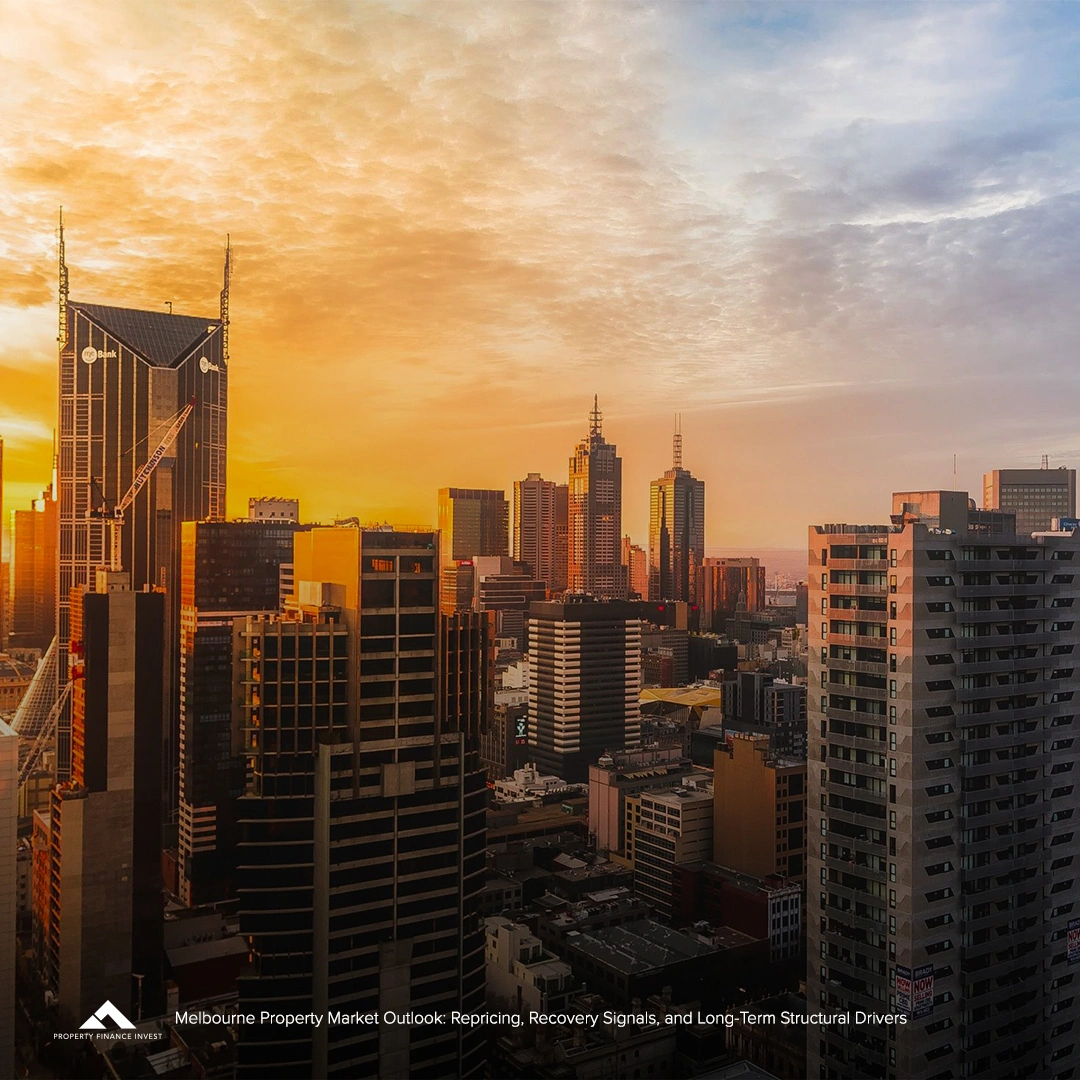
27 Jun Melbourne Property Market Outlook: Repricing, Recovery Signals, and Long-Term Structural Drivers
The Melbourne property market is entering a phase that is increasingly being described as a “repricing cycle” rather than a traditional rebound. This distinction is important, as it reflects a shift in how buyers, investors, and analysts are interpreting current market conditions. Rather than a uniform recovery across all segments, the market is adjusting to new affordability levels, interest rate pressures, and changing demand patterns.
Melbourne remains one of Australia’s most significant property markets, underpinned by strong population growth, diverse economic activity, and sustained infrastructure investment. However, recent market behaviour suggests that performance is becoming more segmented, with varying outcomes across suburbs, property types, and price brackets.
For property markets undergoing repricing, the focus shifts away from rapid price escalation and toward value realignment, long-term demand fundamentals, and structural growth drivers.
Understanding the “Repricing” Phase in Melbourne
The concept of repricing refers to the adjustment of property values in response to changing economic conditions, particularly interest rate increases, borrowing capacity shifts, and affordability constraints. Unlike a boom or recovery phase, repricing reflects a market that is recalibrating rather than accelerating.
In Melbourne’s case, this has been driven by several key factors:
- Higher borrowing costs reducing buyer capacity
- Improved supply levels in certain apartment and unit segments
- Subdued investor activity compared to previous cycles
- Increased vendor willingness to adjust price expectations
- Divergent performance between inner, middle, and outer suburbs
This environment creates a more price-sensitive market where negotiation plays a greater role and where value is increasingly determined at the suburb and property level rather than the broader metropolitan average.
Population Growth and Long-Term Demand Fundamentals
Despite short-term market fluctuations, Melbourne continues to benefit from strong structural demand drivers, particularly population growth and migration.
As one of Australia’s fastest-growing cities, Melbourne attracts both international migrants and interstate movers seeking employment opportunities, education, and lifestyle benefits. This ongoing population increase continues to place long-term pressure on housing demand, even during periods of market softness.
Population growth also contributes to sustained demand across rental markets, particularly in well-connected suburbs and areas close to employment hubs. Over time, this forms a foundational support layer for property values, even when short-term price movements are subdued.
Infrastructure Investment and Urban Expansion
Infrastructure development remains a defining feature of Melbourne’s long-term growth story. Major transport projects, urban renewal precincts, and population corridor expansions continue to reshape the city’s spatial and economic structure.
Large-scale transport initiatives improve connectivity between growth corridors and established employment hubs. This has historically contributed to increased demand in suburbs positioned along new or improved transport lines.
Urban expansion zones are also playing an increasingly important role in housing delivery. These areas are critical in addressing population growth, although they often experience different market dynamics compared to established inner and middle-ring suburbs.
The ongoing evolution of infrastructure continues to influence how demand is distributed across the metropolitan area, reinforcing the importance of location-specific analysis in a repricing environment.
Suburb-Level Divergence Across the Market
One of the most notable features of Melbourne’s current market cycle is the increasing divergence in performance between different suburban categories.
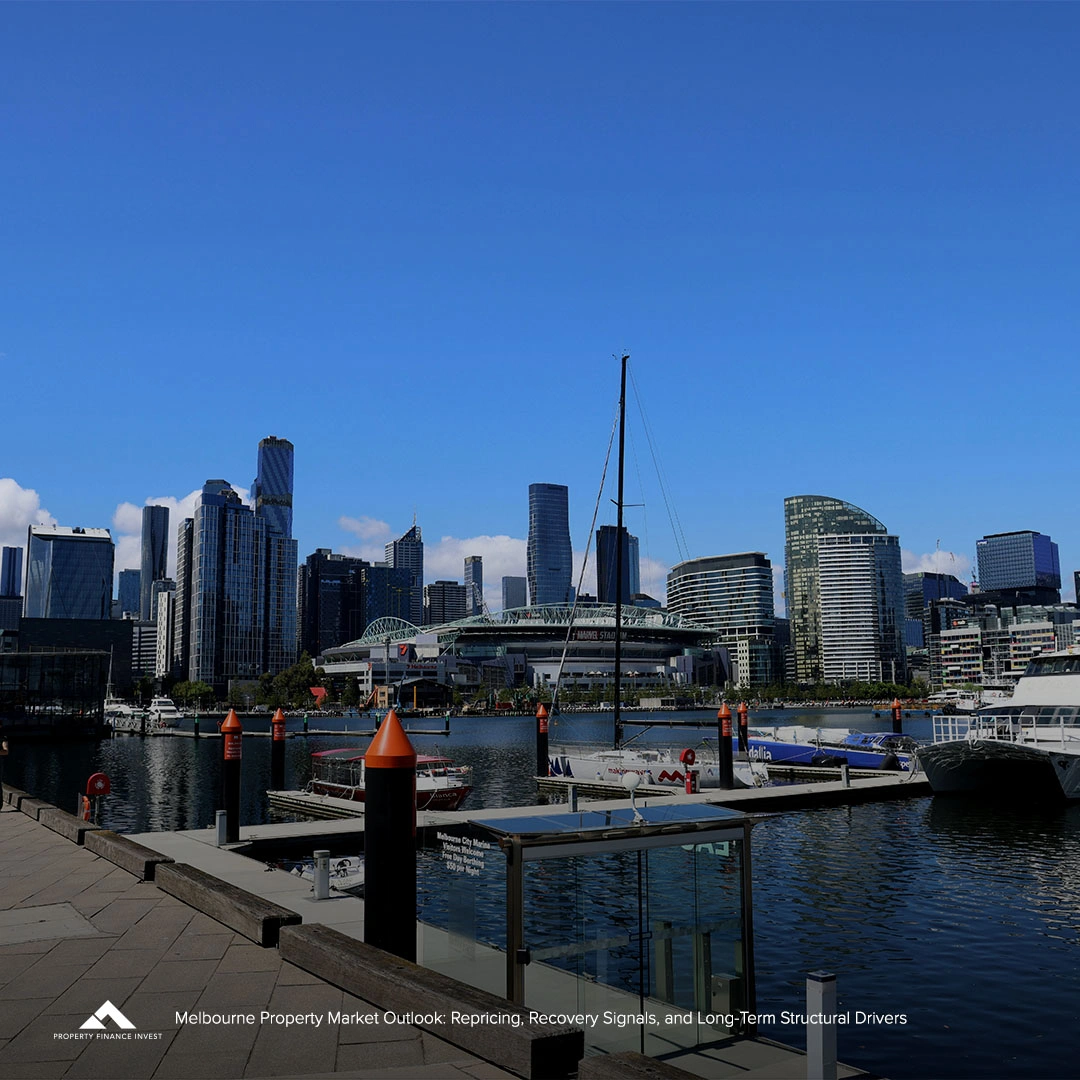
Inner-City and High-Density Areas
Inner-city areas continue to experience varied conditions, particularly in apartment markets. Higher supply levels in some precincts have contributed to more competitive pricing conditions, while well-located and lifestyle-oriented properties remain more resilient.
Demand in these areas is largely driven by professionals, students, and renters seeking proximity to employment, education, and lifestyle amenities.
Middle-Ring Suburbs
Middle-ring suburbs remain a key focal point for family demand due to their balance of affordability, liveability, and accessibility. These areas often demonstrate more stable long-term performance due to consistent owner-occupier demand.
Infrastructure improvements and transport upgrades continue to support demand in these suburbs, particularly those with strong school zones and established amenities.
Outer Growth Corridors
Outer suburban growth areas continue to play a critical role in Melbourne’s housing supply pipeline. These regions tend to attract first-home buyers and long-term investors seeking affordability.
However, performance in these areas is highly dependent on infrastructure delivery, transport connectivity, and employment access. Suburbs with strong planning support and ongoing development tend to demonstrate more consistent demand patterns over time.
Rental Market Conditions and Demand Pressures
Melbourne’s rental market remains tight in many segments, although conditions vary significantly by property type and location. Population growth, combined with constrained new housing supply in certain segments, continues to support rental demand.
Well-located properties near employment hubs, universities, and transport infrastructure continue to experience strong tenant demand. At the same time, rental affordability pressures are influencing tenant behaviour, with increased demand for shared accommodation, smaller dwellings, and outer suburban rentals.
The imbalance between rental supply and demand remains a key feature of the market, particularly in areas where population growth has outpaced housing delivery.
Capital Growth Outlook in a Repricing Environment
In a repricing phase, capital growth is typically more subdued in the short term, with performance varying significantly across suburbs and property types. However, long-term growth drivers remain intact.
Melbourne’s historical capital growth has been supported by several structural factors:
- Sustained population growth and migration inflows
- A diverse and resilient economic base
- Strong employment in education, healthcare, and professional services
- Continued infrastructure investment
- Long-term housing undersupply in key locations
While short-term price movements may reflect adjustment pressures, these underlying fundamentals continue to support Melbourne’s position as one of Australia’s core long-term property markets.
Repricing cycles often create periods where value becomes more visible, particularly for buyers assessing long-term fundamentals rather than short-term momentum.
Economic Diversity and Market Stability
One of Melbourne’s key strengths lies in its economic diversity. The city supports a wide range of industries, including finance, education, healthcare, technology, manufacturing, and professional services.
This diversity contributes to employment stability and helps underpin consistent housing demand across different economic cycles. Unlike markets heavily reliant on a single industry, Melbourne benefits from a broader economic base that helps moderate volatility over time.
This economic structure also supports a large and varied rental population, further strengthening demand for residential property across multiple segments.
Affordability and Market Adjustment
Affordability constraints continue to shape Melbourne’s property market dynamics. Following periods of strong price growth, many buyers are now reassessing price expectations in light of borrowing capacity changes.
This has contributed to more balanced negotiation conditions in certain segments, particularly where supply levels are higher. At the same time, well-located properties with strong fundamentals continue to attract competitive interest.
The repricing process is effectively realigning expectations between buyers and sellers, creating a market that is more sensitive to value, condition, and location.
Long-Term Outlook for Melbourne Property
The long-term outlook for Melbourne remains closely tied to its structural growth drivers. Population growth, infrastructure expansion, and economic diversity continue to underpin demand for both rental and owner-occupier housing.
While short-term conditions reflect a repricing phase, the broader trajectory remains influenced by long-term fundamentals rather than cyclical volatility alone.
As infrastructure projects progress and population growth continues, demand is expected to remain concentrated in well-connected suburbs and established growth corridors. Over time, this reinforces the importance of location, accessibility, and liveability in determining property performance.
Conclusion: A Market in Transition, Not Decline
Melbourne’s property market is not characterised by a downturn in structural terms, but rather by a recalibration of pricing expectations across different segments. This repricing phase reflects changing economic conditions and evolving affordability dynamics rather than a fundamental weakening of demand.
Melbourne continues to demonstrate strong long-term fundamentals supported by population growth, infrastructure investment, and economic diversity. While short-term performance may vary, the underlying drivers of demand remain firmly in place.
For property markets in transition, the key theme is differentiation. Outcomes increasingly depend on suburb selection, property type, and alignment with long-term demand drivers rather than broad market trends alone.